
Kitsure Large Cutlery Tray Drawer Organiser, Adjustable Kitchen Accessories | 5 Compartments, Id
£14.44
View on Amazon →
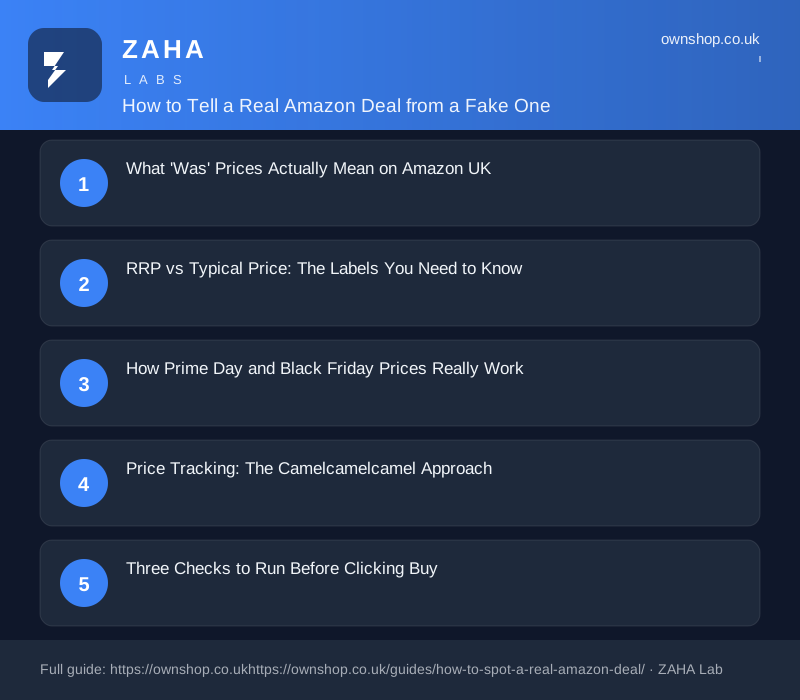
Published 16 September 2026 · updated 2026-09-16 · by OwnShop UK
A kitchen gadget showing 'was £49.99, now £19.99' sounds like a 60% saving. But if the product never sold above £21, the badge is meaningless — you are paying a normal price with inflated packaging around it.
The fastest way to tell a real Amazon deal from a fake one is to check the item's price history using a free tracker. If today's price matches the all-time low, the saving is genuine. If the 'was' price only appeared briefly before today's sale, it was manufactured specifically to make the discount look bigger than it is.
The crossed-out figure next to a sale badge is Amazon's reference price: the highest price at which the product was listed during a recent reference period. UK consumer law — the Consumer Protection from Unfair Trading Regulations — requires reference prices to reflect a genuine previous offer. Amazon complies by using real listed prices rather than invented numbers.
The gap in the rules is the reference period and sales volume. A seller can list an item at £49.99 for a few days, generate zero sales at that price, then drop it to £24.99 and display a '50% off' badge. Nothing in that sequence is technically unlawful, but the implied saving never existed in practice. The 'was' price is a ceiling, not a typical price — and marketplace sellers of generic kitchen and home goods exploit this more than most.
This mechanism is not unique to small sellers. It appears across product categories, from storage boxes to air fryers, wherever a seller controls their own listing price and can briefly raise it to set a reference before a promotion.
Not all Amazon price labels carry the same weight. After the Competition and Markets Authority scrutinised Amazon UK's pricing practices in 2022, Amazon began distinguishing more clearly between reference price types. Knowing which label you are looking at changes how much trust you place in the stated saving.
| Label | What it actually means | How reliable |
|---|---|---|
| Was £X (strikethrough) | Highest listed price in reference period | Low — can be briefly inflated |
| RRP £X | Manufacturer's suggested retail price | Low — often aspirational |
| Typical price £X | Amazon's median sold price, usually 90 days | Medium — more honest benchmark |
| Lightning Deal | Time-limited % off on limited stock | Variable — always check history |
| Coupon (clip to apply) | Extra % off applied at checkout | Often genuine; verify baseline |
| Subscribe & Save | Recurring discount for auto-delivery | Usually genuine; compare unit cost |
| Deal of the Day | Featured daily deal | Variable — cross-check first |
'Typical price' is the most useful label on this list. Amazon calculates it from its own transaction data, so it reflects what buyers actually paid rather than a posted number. When you see 'Typical price: £X' alongside a lower sale figure, the comparison is far more meaningful than a struck-through 'was' price.
RRP (recommended retail price) is the manufacturer's suggested number — sometimes a figure no retailer ever actually charged. 'Down from RRP £35' on an item sold everywhere at £16.99 tells you nothing about whether you are getting a deal today.
These events do produce genuine record lows, but not across the board. Amazon's own devices — Echo speakers, Kindle e-readers, Fire TV sticks — reliably hit their lowest-ever prices during Prime Day in July and Black Friday in November. Brands with strict MAP (minimum advertised price) agreements also tend to drop meaningfully because the event gives them structured cover to discount temporarily.
The categories where sale prices are most inflated are generic kitchen accessories, storage products and small appliances from marketplace sellers. Many of these products launched at high prices specifically to build a reference price before the event window opens. A reliable tell: if a product's Black Friday price is the same as or higher than its average price from September and October, there is no saving — the event badge is decoration.
Volume also matters. Lightning Deals on genuine, well-reviewed products from established brands tend to be real. Lightning Deals on items with fewer than 50 reviews from a seller you have never encountered deserve extra scrutiny, regardless of the percentage claimed.
Most price trackers let you enter a target price and email you the moment the product drops to it. Set Black Friday alerts in September and Prime Day alerts in early June. When the sale launches and stock is limited, you already know whether the price is genuine — no frantic comparison needed under time pressure.
Price trackers record a product's Amazon price daily over months or years and display the full history as a chart. This single tool eliminates almost every pricing illusion because it shows the complete story, not just today's claim.
Camelcamelcamel is the most widely used free tracker for Amazon UK. Paste the product URL or its ASIN — the 10-character code visible in the product link — into the site, and it shows you four things worth checking:
Keepa is a similar service with a browser extension that overlays the full price chart directly on the Amazon product page, so you see the history without leaving the listing. Both tools are free for basic use and require no account to check a single product.
These steps take under two minutes together and catch the vast majority of inflated deals.
Paste the product URL into a price tracker. If today's price is within 10–15% of the all-time low, the deal is credible. If the 'was' price only appears once in the chart — briefly, just before the current sale period — it was inflated specifically for the badge. This single check takes about 30 seconds and is the most reliable filter available.
Run a quick Google Shopping search for the product name or model number. If John Lewis, Argos, Currys or a specialist UK retailer stocks the same item at a similar price or lower, Amazon's offer is simply ordinary retail. Competition keeps UK pricing close across major retailers; when Amazon is genuinely cheapest by a meaningful margin, it shows up clearly.
On marketplace listings where a third-party seller handles dispatch, verify their feedback score and the returns address. Returning a faulty £20 kitchen item to an overseas warehouse via tracked post can cost more than the item itself. For budget home and kitchen purchases, prioritise listings sold and dispatched by Amazon directly, or third-party sellers with clearly stated UK returns and a feedback score above 95%.
If a product has several hundred reviews but most arrived within a short window — visible in the Most Recent section — this can indicate coordinated or incentivised review activity. The Competition and Markets Authority has taken enforcement action over this, but affected listings remain live. Short, generic five-star reviews without specific detail about the product are a yellow flag. One- and three-star reviews, particularly verified purchases, often contain the most useful real-world information about durability and sizing.
A deal earns the label when most of these align: the price tracker confirms a price at or near the all-time low; a quick competitor search finds no retailer matching it; the seller has a clean fulfilment record with UK returns; and you were planning to buy the item within the next few weeks regardless.
For durable home and kitchen purchases — storage containers, cleaning equipment, kitchen scales, small appliances — timing around genuine sale lows makes real sense. These are items with a long useful life where saving £8–£12 at the right moment adds up over time.
For impulse categories, the better discipline is to set a tracker alert at your target price and wait. Items that reach genuine record lows tend to return to them, often more than once a year. A sale badge is a prompt to investigate, not a reason to buy.


Since 2022, Amazon has displayed 'Typical price' alongside some sale figures. It represents Amazon's own calculation of the median price the item sold at over a recent period — usually 90 days. This is more meaningful than a struck-through 'was' price, which only reflects the highest listed price regardless of whether anyone paid it. When you see both labels, compare the current price against the typical price first, then confirm with a price tracker for the full history.
Sometimes, and it depends heavily on the category. Amazon's own devices — Echo, Kindle and Fire TV products — reliably hit genuine record lows during these events. Established brands with stable pricing across UK retailers also tend to discount meaningfully. The deals most likely to be inflated are generic marketplace products, particularly kitchen accessories and home goods, which often use artificially raised reference prices to manufacture large-looking discounts. A 30-second price tracker check tells you definitively.
Go to uk.camelcamelcamel.com and paste in the full Amazon product URL or the ASIN — the 10-character alphanumeric code in the product link. The site displays a chart of the item's complete price history. Look for the all-time low, the average price, and whether the current 'was' figure corresponds to a genuine sustained price or a brief spike just before the sale. The Keepa browser extension does the same job as an overlay directly on the Amazon product page.
Not unconditionally. Rather than relying on the summary score, check the distribution of ratings and read a selection of recent verified-purchase reviews. If a large proportion of reviews arrived in a short window, or if most are brief, five-star and non-specific, this can indicate coordinated activity. The Competition and Markets Authority monitors this but affected listings remain live. Detailed one- and three-star verified reviews typically contain the most reliable information about real-world quality, fit and durability.
As an Amazon Associate we earn from qualifying purchases. Prices and availability are accurate as of the date shown and are subject to change — the price on Amazon at checkout is the one that applies.

A practical budget gift guide for toys and games: what a tenner covers, when £20 hits the sweet spot, and how to spend £30 on gift
Build a home office that actually works without overspending. Covers desk depth, chair adjustability, monitor height and lighting
Learn how Amazon's 'was' prices really work, when Prime Day deals are genuine, and the three checks every UK shopper should run be